Notes
787 at Farnborough
Jul 11, 2012

Shorty flying display by the Qatar bound 787 under moody skies.
Soda Meiser Pedal Build
Jun 22, 2012
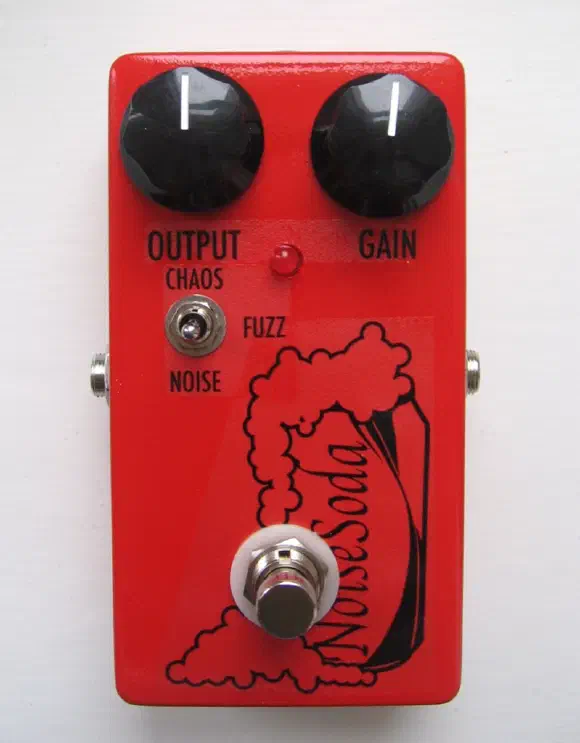
Earlier in the year I built a Tube Screamer clone from a kit, pleased with the result and feeling more ambitious I thought I’d try building another design. This time I picked the more exotic Devi Ever Soda Meiser ; it’s a fuzz pedal with a wide range of gain and the ability to create some very strange, broken sounds.
The other reason for this choice is that Devi has published the schematic for this pedal, which along with the stripboard/vero layout, guided my build. If you’re using this stripboard layout be warned that while the legs of the transistors are labelled correctly the MPSA18 transistors I bought have the flat side on the other side to that show in the layout, so double check the data sheet before you solder them into place. All the components were bought from Bitsbox.co.uk , apart from the enclosure which I got from Gap Co .
This Community Is Not What It Used To Be
Jun 4, 2012
4Chan’s [NSFW] founder Chris Poole seems to be suffering from a heavy bout of nostalgia. In his one man panel at ROFLcon he bemoans the decline of the internet communities that used to be home to meme creation and storytelling, now replaced by endless repeats of advice dog .
There seems to be a built in reaction to humans that we believe everything is in decline . It’s been a popular meme of its own since ancient times. Plato believed that wide spread literacy would lead people to becoming more forgetful , even if the great value of literacy is now accepted everywhere.
Enjoy the Good Weather
May 25, 2012

Whatever you’re doing today I hope you get to enjoy the good weather. After a month of almost continuous rain it’s worth appreciating.
De Havilland Mosquito
May 12, 2012
This documentary on weapons design reminded me of the real genius of the de Havilland Mosquito. This wasn’t its speed, though it could outpace almost every other aircraft of the time. It wasn’t the versatility it offered, though it did everything from photo-reconnaissance to night-fighter missions. Nor its manoeuvrability, which allowed it to fly low and fast under the radar and avoid anti-aircraft guns.
The real genius was the consideration of the design and manufacture process together, and it was only because it was designed with these considerations in mind that it was possible at all.
Not So Lonely
May 2, 2012
There’s a strong counter article in Slate arguing against the assertion that Facebook is making us more lonely .
While we’d like results now, it’s probably far to early to draw any real conclusions about how social networks are changing society. They’ll improve some aspects and perhaps remove others, as is the way with new technology. The best we can do is try to ensure that nothing value is lost, while keeping as many positives as we can. It all comes down to how the tool is used, but the defaults that the tool has may drive us particular directions which we need to be conscious of. How would we use the telephone differently if the default was to broadcast to a whole road?
You Are Not a Gadget - All Mashed Up
Apr 28, 2012
A few months ago I read Jaron Lanier’s ‘You Are Not a Gadget’; self-described as a manifesto, it covers a range of ideas on the evolving nature of computing, the internet and the changes, for better or worse, it’s bringing about in society. The writing and ideas presented are incredibly thought provoking and stand far above the usual level of internet navel gazing that happens on many sites.
The main ideas that struck me were the erosion of the human element in the internet; the over-simplification for the convenience of computers, not humans; and that we’ve hit a cultural stasis, where we are not generating new ideas or fashions.
Birches in the Snow
Apr 18, 2012
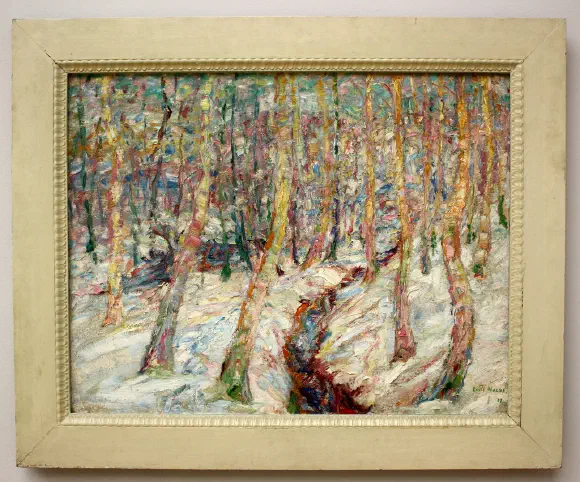
Last week I had a few spare hours in Hamburg and spent the time in the Kunsthalle .
Amongst the more famous residents, there was also the beautiful Birken im Schnee. Not one of Emil Nolde’s most famous works, but incredibly beautiful.
A scene that by most artists would have been painted overwhelmingly in white, is created in Nolde’s trademark bright colours while managing not to lose any subtlety; incredible.
Picture Curtesy of BernieCB
'Like' Loneliness
Apr 16, 2012
There’s a great article over at The Atlantic looking at if Facebook changes the way we interact with people.
While some of the studies show interesting correlations between social behaviour and the way people use Facebook, none can demonstrate causation, which is always much more difficult. It still invites an interesting question; is there something in the mechanics of social networks that encourages shallow relationships over deeper ones?
The main feature of Facebook (or any similar social network) that I think might lead to more, but shallower, friendships is the ‘Like’ button. There’s a phenomenon known as Operant Conditioning , where an individual changes their own behaviour in response to positive on negative reinforcement of that behaviour. If you are rewarded you do it more, if you are punished you do it less.
Tintern Abbey
Mar 25, 2012
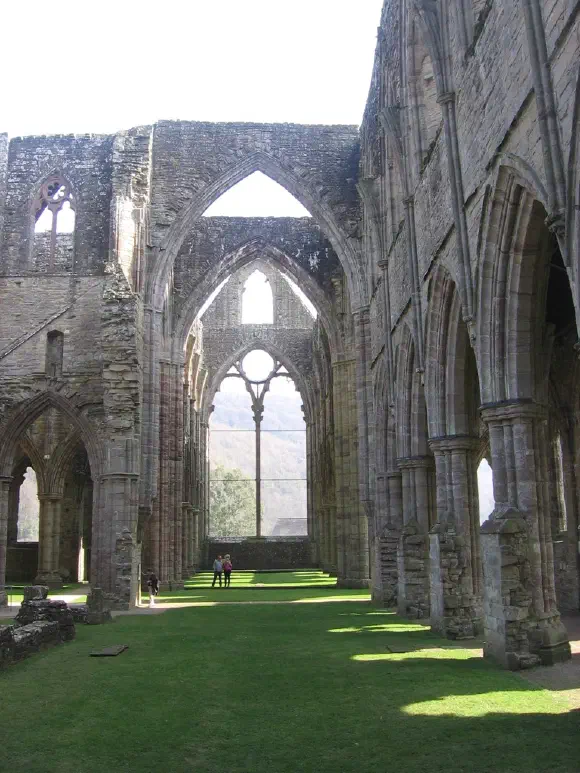
The ruins of Tintern Abbey have been abandoned for almost five hundred years, since 1536 when the abbey became a victim of the nationwide dissolution of the monasteries.
Now only the walls and pillars remain, with lush grass growing in the nave and interior spaces. The most beautiful aspect of the abbey’s decay is how its appearance mimics a stand of trees. The sandstone, flaking and banded like bark, the pillars reaching straight up like Californian redwoods and the ground shaded by the remaining walls and the outlines of arches soaring above.